
Since the first trading platforms appeared in the early 2010s, they have been among the most profitable parts of the crypto ecosystem. Exchanges that offer perpetual futures, ongoing futures contracts that often use leverage, are especially lucrative. But the way these markets are organized is starting to change.
Where trading was long dominated by centralized exchanges such as Binance, attention is now shifting to a new generation of platforms: decentralized exchanges (DEXs). On these exchanges, trading takes place transparently, directly on the blockchain.
From centralized to decentralized exchanges
Centralized exchanges share many similarities with traditional financial markets. Users deposit funds with an intermediary that executes transactions and maintains account balances. While this model is efficient, it diverges from the principles of Decentralized Finance, or DeFi.
Decentralized exchanges adopt a completely different approach. Instead of routing transactions through a central entity, all activity is recorded directly on the blockchain. Since the DeFi boom of 2020, developers have attempted to build systems capable of matching centralized exchanges in speed and liquidity. That goal long seemed unattainable, but recent developments have changed the picture entirely.
Data show that decentralized exchanges are rapidly closing the gap. In Amdax’s House View 2024, we anticipated this transition. It arrived somewhat later than expected, but 2025 has confirmed it decisively. The market share of decentralized exchanges in the derivatives sector has risen from around 5 percent to more than 14 percent of total trading volume. The name that stands out most prominently is Hyperliquid.
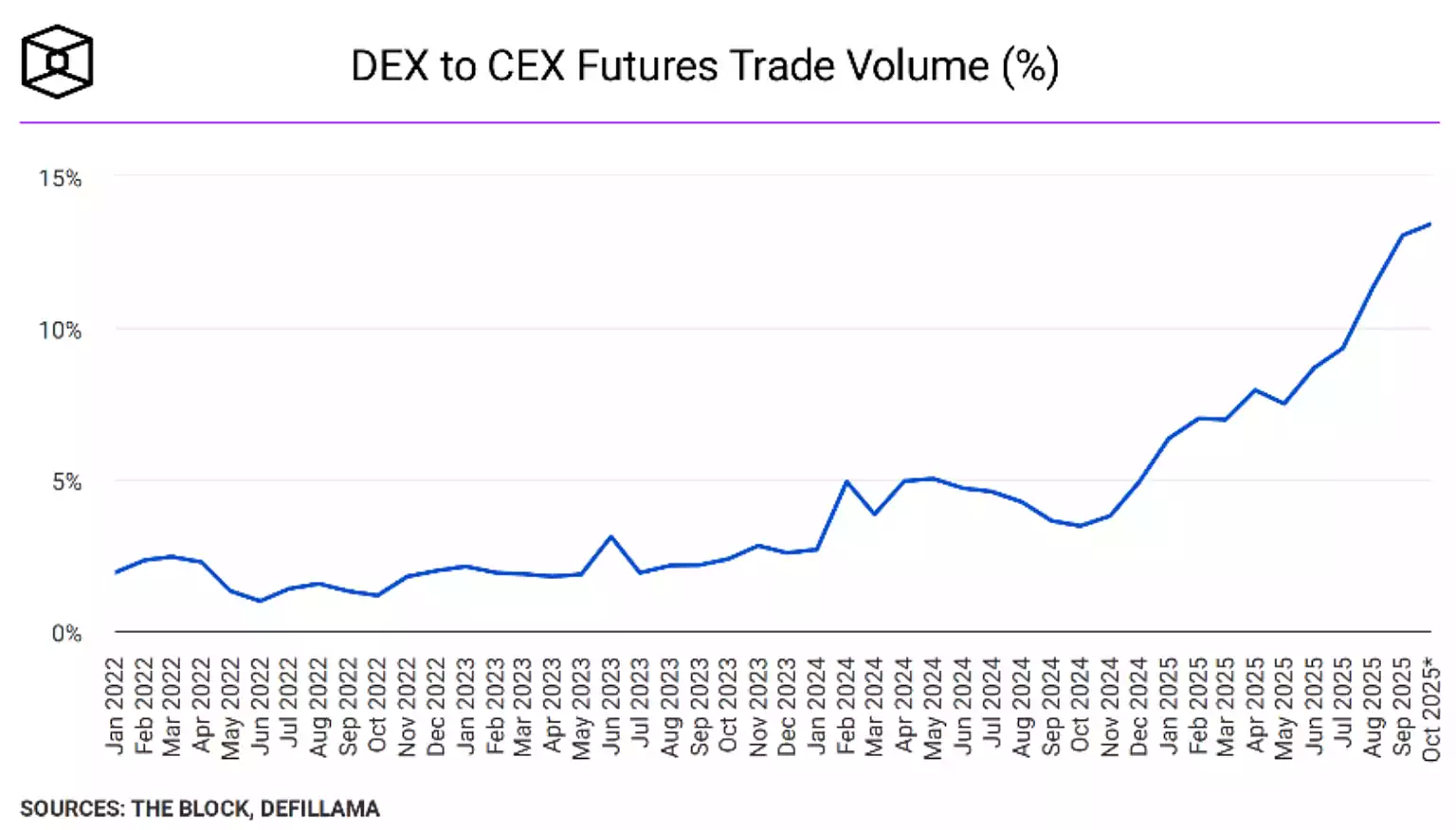
Figure 1: Decentralized exchanges are quickly capturing market share in the derivatives market.