While many decentralized exchanges operate on existing blockchains such as Ethereum or Solana, Hyperliquid chose a different route by developing its own blockchain specifically designed for trading.
Every order, trade, and cancellation is recorded directly on the network. Thanks to its proprietary consensus mechanism, the system can process up to 200,000 actions per second. This provides traders with the speed and convenience they are accustomed to from traditional exchanges, but within an open and transparent infrastructure.
Hyperliquid also features the HyperEVM, a smart contract platform that functions similarly to Ethereum. Developers can build applications in a familiar environment while benefiting directly from the platform’s liquidity and trading activity. This enables new types of DeFi applications that were previously impractical, such as more efficient lending protocols.
Rapid growth of Hyperliquid
Hyperliquid’s innovative approach has proven highly successful. After a closed testing phase in 2023, the platform achieved a major breakthrough at the end of 2024 with the launch of its token, HYPE.
In the 18 months between its inception and the token launch, the platform processed 460 billion dollars in trading volume. In the 11 months that followed, total volume grew to 2.6 trillion dollars, with monthly activity regularly exceeding 200 billion and occasional peaks reaching 400 billion.
This growth has translated directly into revenue, as all trading fees flow to the protocol itself. In recent months, Hyperliquid has become one of the most profitable projects in the crypto sector, now accounting for nearly one third of all blockchain network revenues. It has generated more income in two years than all applications on Solana and Ethereum combined.
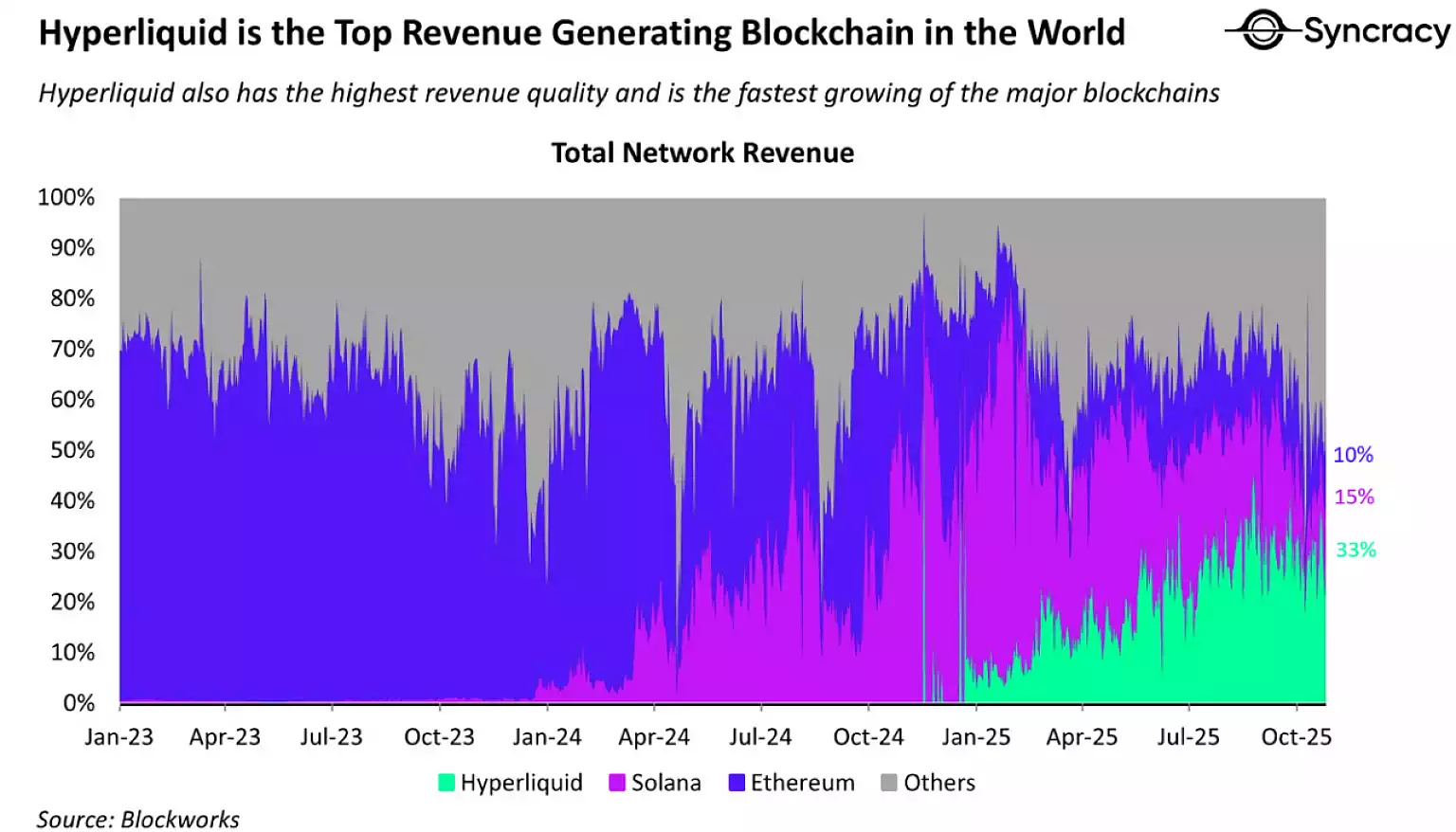
Figure 2: Hyperliquid now accounts for the largest share of network revenues in the industry.